Intuitive Eating
Food. A fundamental basic need that unites everyone yet many struggle with it. Traditional diets are based on restricting calories, and there have been and are different types of weight loss recipes or eating only one of the same thing such as fruits. I remember a friend of the family growing up who only ate cabbage at one point for all its reported weight loss benefits.
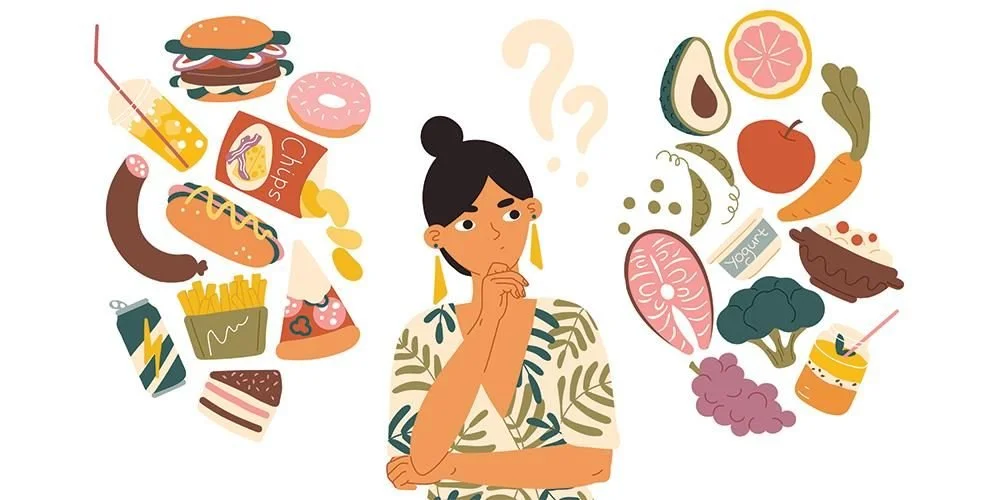
Welcome to the concept of intuitive eating, the total opposite of weight loss diets and restrictions. It suggests you tune into your body and mind and pay attention to natural signals that come from within to guide your food intake. Intuitive eating invites you to refrain from thinking of foods as either good or bad and respect your inner signals to help you to choose and decide for yourself what you want to eat. The goal is to respect your taste buds that will guide you on this journey of food discovery and what feels good to you rather than some fad diet.
Intuitive eating involves respecting your natural preferences for food, yet it’s not a free for all. You can’t just eat anything you want whenever you want but rather it involves paying attention to signs and signals that come from within to determine when you are satisfied enough to know when to stop eating. Eating slowly and savouring your food will help you to pay more attention to those signs and signals. What comes to mind is the slow food movement which encourages changes in your lifestyle such as slowing down and returning to a more relaxed rhythm rather than the fast-paced urban jungle which also affects how you savour, enjoy and eat your food.
The idea is not to focus on weight gain or weight loss but a change in one’s lifestyle which includes paying attention to the foods you are eating on a daily basis. Eating intuitively involves rejecting diets. Diets often restrict essential nutrients, and when one diet fails, it is easy to run to the next trendy diet leading to instability in food intake. This can also lead to developing an eating disorder. Pay attention to the signs and signals from your body and eat when you are hungry. Ignoring these signs and signals will most likely lead to overeating. This can also be traumatic as feelings of guilt arise after going off on a binge. This affects feelings of self-worth and self-esteem as well. Pay attention to when you feel full and then stop. Try to get a variety of different foods to ensure that you are getting the requirements for essential minerals and nutrients. This will also work wonders for your mental health and alleviate the signs of depression and anxiety.
Moderation is key. Have that pastry but do it in moderation. Try to aim for what is referred to as the “Pareto Principle”. That is the 80/20 rule. Aim for 80 percent nutritious and healthy food intake and the other 20 percent can consist of fun foods, which are less healthy, but it is ok to live a little and indulge.
Food can provide emotional comfort for many people. Individuals who suffer from anxiety and depression can sometimes use food as a way to self soothe and ease the emotional pain of what they are going through. This is maladaptive and can create more problems such as unintended weight gain. On the other end are those who restrict their food intake when depressed or anxious, leading to unintended weight loss further aggravating their signs of depression and anxiety. It helps to talk to a therapist who can provide some guidance and some much needed support. Intuitive eating has not only physical benefits but boosts mental health and wellness overall.
Some individuals need to follow a specific diet due to health issues and in cases such as these it is always best to follow the advice of your family doctor. Intuitive eating in cases such as diabetes and high blood pressure is not recommended on its own. Heavily processed foods should most likely be avoided most if not all of the time, and critics of intuitive eating emphasize this point. Be careful how you make use of that 20 percent. It’s not a free for all.
There is a distinction between intuitive eating and mindful eating. Try to combine both. Intuitive eating, as we have discussed, is about tuning into the signals and signs your body and mind are sending you. Mindful eating, on the other hand, involves staying in the moment and being present while you eat and having a spirit of gratitude. This is also important on your journey to wellness.
There is a distinction between intuitive eating and mindful eating. Try to combine both.